
4 min
When Safety Feels Like Friction — and What Leading Alberta Employers Do Differently
How Safety Governance and Executive Oversight Strengthen Compliance and Inspection Readiness in Alberta
Read

Lessons from the field — what I’ve seen go wrong (and how I’ve learned to prevent it)
As a Safety Advisor, most of the safety problems I see don’t start with negligence. They start with reasonable assumptions — the kind that make sense day to day — until the business is forced to test them under pressure.
When I walk onto a worksite, I’m not looking for a perfect safety program. I’m looking for whether the system will hold up when it’s tested — during an inspection, after a close call, or when a key person isn’t available. Over time, five assumptions keep showing up — and those assumptions have real consequences.
When Assumptions Turn Into Consequences
Recent Alberta enforcement and court decisions show how quickly untested assumptions turn into outcomes businesses didn’t plan for:
OHS investigations focused less on what business owners believed was in place, and more on what could actually be demonstrated — written hazard assessments, emergency response plan, competent supervision, and evidence that risks were identified and controlled as conditions changed.
When a serious incident occurred, safety compliance was not sufficient at the time of the event. To protect your company, due diligence must be demonstrated prior to the event.
I hear this most often in warehouses, shops, and routine operations.
No major chemicals. No extreme heights. Just everyday work.
Then I walk the floor and see forklift traffic crossing pedestrian paths, repetitive lifting, pinch points, stacked materials, and seasonal slip hazards. Normal work is where assumptions hide best. When hazard assessments aren’t written, dated, and kept current — especially when work changes — the cost of an incident usually shows up later, when proof is requested and it isn’t there.
All about the documentation: A hazard assessment that reflects today’s work, with a clear revision date and controls people can actually point to.
A clean record builds confidence — but it isn’t the full picture. I’ve stopped treating “no incidents” as proof. What matters more is whether close calls are noticed and acted on before they repeat. Not every near miss is reportable but ignoring them is how patterns form that lead to serious incidents that could otherwise be prevented.
Required Evidence: Many companies may have close calls without proper documentation, a clear process includes reporting leading indicators and taking action on necessary changes.
Experience matters — until proof is required.
I’ve seen capable crews and good supervisors pulled into difficult situations when something goes wrong and there’s no record of training, what was reviewed, or expected.
Verbal knowledge works — until it doesn’t.
Documentation required: Clear expectations and a practical way to show who was trained on what — and when (as well as signatures and dates to prove it)
This assumption usually comes from trust. The problem shows up in the overlap — shared spaces, changing conditions, and handoffs between trades. That’s where gaps appear, often without anyone realizing it until something goes wrong.
What holds up: Communication around who coordinates safety and how shared hazards are identified and managed.
This pattern shows up often. No one was avoiding safety — they just didn’t expect to need everything at once. Building proof under pressure takes more time than maintaining it steadily, and that time usually comes straight out of operations.
What holds up: Records need to be current and available, they can not be produced after an incident has already occurred. Documentation is far better than relying on someone’s memory.
Some assumptions fail immediately. Others sit quietly for years without obvious problems.
The most costly ones are exposed when conditions change and the system relies on memory, availability, or goodwill instead of structure.
There is real issues that don’t speak loudly until finally a serious event occurs.
What I’ve Learned Over Time
Business owners understand that safety takes effort.
Being a business owner myself, I understand the pressures that a company has in order to get the job done. Focusing on safety daily has huge time saving benefits.
The goal isn’t to do less safety. The goal is to have safety be incorporated naturally in day to day business operations. Being prepared instead of reacting is imperative to business success.
Our team is here to engage with your company and educate your people at all levels. Have peace of mind knowing that our experienced team of Safety advisors will improve your operations creating a safe work place where everyone gets to go home at the end of the day. Click here to reach out to one of our advisors.
If you're not sure your safety system would hold up under an OHS inspection, it's worth finding out before an officer does.
Unlock a ready-to-use safety management system that helps you build compliance, reduce risk and protect your team without reinventing the wheel — even if you’ve never written a policy before. Click here and discover how Safety in a Box can simplify your safety program and save you time, money and headaches.
Worried about what happens if an officer shows up?
Download our free OHS Order Response Checklist — know exactly what to do from the moment you receive an order.
Written by
Safety Ahead Team
Alberta-based safety consultants with decades of field experience — COR auditors, OHS advisors, and WCB specialists working with employers across the province.
About Safety AheadWe translate Alberta OHS legislation changes into plain-language action steps for your specific operation — so you stay compliant without the guesswork.
Safety Ahead services
Keep reading
How Safety Governance and Executive Oversight Strengthen Compliance and Inspection Readiness in Alberta
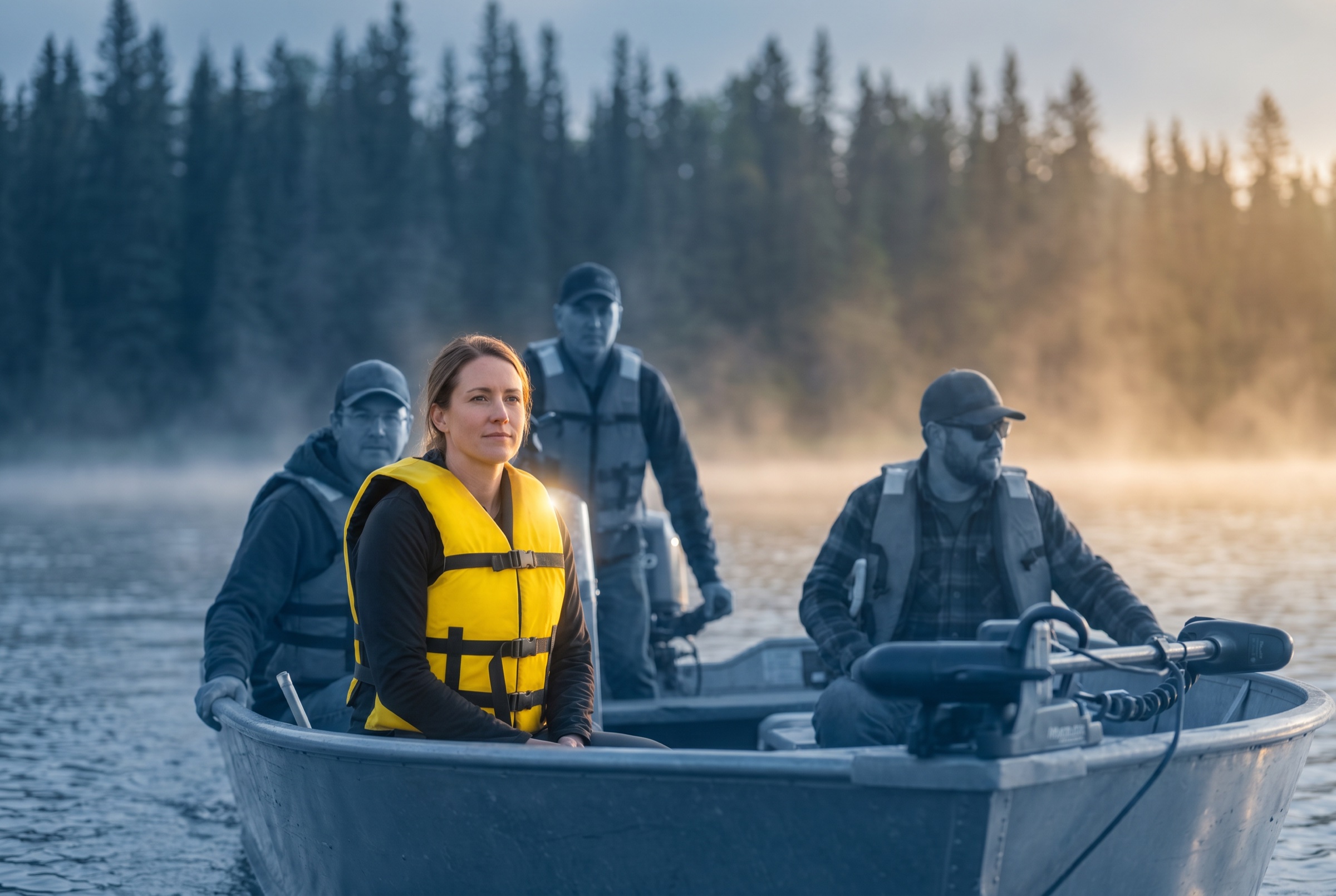
Alberta employers whose workers operate boats — on lakes, rivers, or remote access routes — carry safety responsibilities that go beyond a life jacket. Here is what the OHS Act requires and what good practice looks like.

Safety in a Box is Alberta's small employer safety program — designed for companies that need a compliant safety system without the overhead of a full-time safety manager. Here is what it includes and whether it's right for your operation.