780-473-4772info@safetyahead.ca
Mon–Fri 7:30–4:30 · Fri closes 12:00 MTClosed
Safety Ahead Ltd.Safety Ahead Ltd.
BlogStore
Book a Consultation
Safety Ahead Ltd.Safety Ahead Ltd.
780-473-4772Book a Consultation info@safetyahead.ca
Safety Ahead Ltd. LogoSafety Ahead Ltd.

Senior safety management and compliance consulting for Alberta contractors — and companies working across provincial and US borders.

Safety in a Box Store

Services

  • All Safety Consulting Services
  • OHS Orders & Compliance
  • COR program & certification
  • SECOR — Small Employer Info
  • Safety Program Development
  • Safety System Assessment
  • Fractional Safety Manager
  • Supervisor & Team Training
  • Contractor Prequalification
  • WCB Claims Case Management
  • Incident Investigation
  • Safety Services Across Alberta

Alberta coverage

  • Across Alberta
  • Edmonton & Area
  • Calgary & Southern Alberta
  • Red Deer & Central Alberta
  • Northern Alberta

Industries

  • All Industries
  • Construction & Civil
  • Oil, Gas & Energy
  • Trades & Subcontractors
  • Manufacturing & Fabrication
  • Transportation & Logistics
  • Engineering & Technical Consulting
  • Equipment Rental & Industrial Services
  • Electrical Contractors

Resources

  • All Free Resources
  • OHS Order Response Checklist
  • COR Audit Checklist
  • Safety Program Checklist
  • Alberta OHS Glossary
  • Safety Insights Blog
  • Client References

Company

  • About Us
  • Careers
  • Contact
  • Privacy Policy

Contact

  • 780-473-4772
  • info@safetyahead.ca
  • #201, 10404 66 Ave NW
    Edmonton, AB T6H 5R6

Credentials & Memberships

NCSO — National Construction Safety OfficerCHSC — Canadian Health & Safety ConsultantProud Member of the Alberta Construction Safety AssociationProud Member of the Edmonton Chamber of Commerce

© 2026 Safety Ahead Ltd. All rights reserved.

Privacy Policy·Contact·Safety in a Box Store

Scout — Safety Ahead

Back Tuesday at 7:30 AM MT

  1. Home
  2. Safety Insights
  3. Back to School Safety Tips
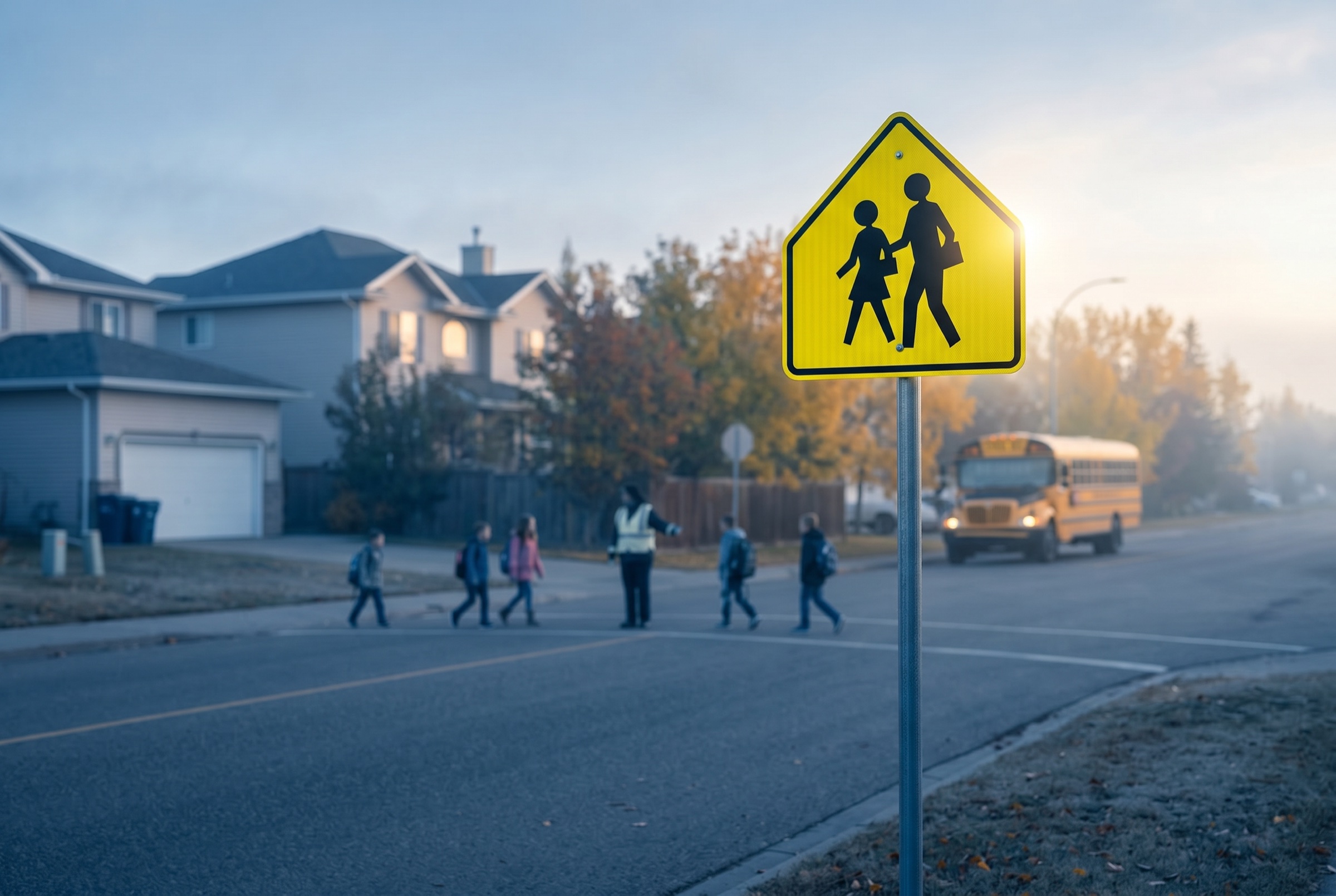
School zone sign on an Edmonton street, commercial vehicle slowing down, children visible on sidewalk
Back to Safety Insights
Safety Programs 2022-08-30 4 min read

Back to School Safety Tips

September means more pedestrians, school zones, and distracted drivers on Alberta roads. Employers with workers who drive as part of their job need a refresher on the rules that apply — and the liability that comes with ignoring them.

It is that time of year again, school is back!! As the school doors open for the year that means the traffic will get busier on our streets and parents and children will deal with more stressful times.

To help you with a safe commute for you, your children and those around you, and tips for children and parents transitioning back to school be sure to follow these safety tips.

1) Observe School Zone Speeds

Although you should always obey posted speed limits, it is especially important during the school year. Children crossing the road on their way to and from school can easily get distracted and step into harm's way. Slowing down and being vigilant is crucial to keeping kids safe. Children are often out throughout the day at recess, lunch, and for certain classes, so it's important to drive slowly throughout the day.

2) Obey the Crossing Guard

A crossing guard is there to keep children safe. If you come up to a set of lights, and the light turns green, but the crossing guard still says stop, follow their direction and not the traffic light. There might be a child still crossing the street that you can't see.

3) Watch for Darting Children

Kids are small and easily distracted, and for drivers, this can create dangerous situations on the roads. Be vigilant and alert behind the wheel. You never know when a small child might step out from between parked cars or off a sidewalk. Your fast reflexes might be needed to prevent an accident.

4) School Buses

Most mishaps take place outside the bus. Make sure children don't arrive too early at the bus stop where they can wander. Make sure children wait well away from the road and stay back until the school bus makes a full stop and the doors open. Explain that they must walk at least three metres (10 feet) away when crossing in front of the bus so the driver can see them. When driving your car near a school bus please note that extra caution is needed. You shouldn't pass a school bus when the signal lights are flashing (as children are often crossing the road at that time) and drive slowly as a general precaution.

5) Sharing the Road with Bicyclists

On most roads, bicyclists have the same rights and responsibilities as vehicles, but bikes can be hard to see. Children riding bikes create special problems for drivers because usually they are not able to properly determine traffic conditions. The most common cause of collision is a driver turning left in front of a bicyclist.

  • When passing a bicyclist, proceed in the same direction slowly, and leave plenty of space between your car and the cyclist
  • When turning left and a bicyclist is approaching in the opposite direction, wait for the rider to pass
  • If you're turning right and a bicyclist is approaching from behind on the right, let the rider go through the intersection first, and always use your turn signals
  • Watch for bike riders turning in front of you without looking or signaling; children especially have a tendency to do this
  • Be extra vigilant in school zones and residential neighborhoods
  • Watch for bikes coming from driveways or behind parked cars
  • Check side mirrors before opening your door

Children and Parents Transition

Even before the pandemic, children’s mental health was a public health concern, and levels of anxiety were on the rise. The COVID-19 pandemic has meant additional stress, fear, and worry for many families. Worries about sickness, finances, and isolation, coping with grief from loss, and having less outside help have made parenting more stressful.

Parents Can

  • Make sure their child has a daily, predictable routine, with regular times for healthy meals, naps, and night sleep at home. Having a rested body and knowing what to expect at home helps children cope.
  • Connect with other parents who have children in the same program and can provide information and make them more comfortable with the program.
  • Talk with teachers about the best way to separate from their child at the start of the day—brief goodbyes are often best.
  • Try to stay calm and reassuring during transition—using a calm voice, with a relaxed face and body to let their child know that they wouldn’t leave them if the child were not safe and protected.
  • Talk with their child about what to expect and help them with strategies to manage stress and cope with worries, and review positive parenting tips to help children with feelings and behavior.

Parents with Concerns Can

  • Take care of themselves during stressful times so they can be better equipped to take care of others.
  • Find resources to learn how to promote resilience and reduce anxiety in their children.
  • Talk to a healthcare professional if their child’s symptoms of anxiety or behavior problems are severe or persistent.
  • Contact a mental healthcare professional for parent training and support so parents can help their child.
  • Find resources for themselves if they are sad, worried, or stressed.

Have a safe school year and lookout for one another!

Resource: Government of Canada

Resource: CDC: Children’s Mental Health

https://www.cdc.gov/childrensmentalhealth/features/COVID-19-helping-children-transition-back-to-school.html


Frequently Asked Questions

Drive slowly and obey posted speed limits, follow crossing guard instructions even if traffic lights say go, watch for children darting out unexpectedly, and be cautious around school buses and bicyclists.

Do not pass a school bus when its signal lights are flashing, drive slowly near buses, and ensure children wait well away from the road until the bus stops and doors open.

Establish a predictable daily routine, communicate calmly and reassuringly, connect with other parents and teachers, and support children in managing stress and anxiety.

Parents should seek advice from healthcare or mental health professionals and access resources for resilience and anxiety reduction as needed.

Not sure if your safety program is actually complete?

Download our free Safety Program Gap Assessment — 9 elements Alberta employers should have covered before an OHS officer or auditor arrives.

Download Free Assessment

Written by

Safety Ahead Team

Alberta-based safety consultants with decades of field experience — COR auditors, OHS advisors, and WCB specialists working with employers across the province.

About Safety Ahead
More in Safety Programs All articles
Safety Program Development

Is your safety program actually working in the field?

We build and maintain Alberta safety programs that hold up under audit and inspection — hazard assessments, orientations, procedures, and ongoing support.

Request a program review Safety Program Checklist

In this article

  • 1) Observe School Zone Speeds
  • 2) Obey the Crossing Guard
  • 3) Watch for Darting Children
  • 4) School Buses
  • 5) Sharing the Road with Bicyclists
  • Children and Parents Transition
  • Parents Can
  • Parents with Concerns Can
  • Resource: Government of Canada
  • Resource: CDC: Children’s Mental Health
  • Frequently Asked Questions

Safety Program Development

Is your safety program actually working in the field?

Request a program review

Safety Ahead services

How our team can help with this in Alberta

  • Request a program review
  • Safety Program Checklist

Keep reading

More in Safety Programs

View all
Boating Safety Tips!
2 min

Boating Safety Tips!

Alberta employers whose workers operate boats — on lakes, rivers, or remote access routes — carry safety responsibilities that go beyond a life jacket. Here is what the OHS Act requires and what good practice looks like.

Read
Back to School Safety
3 min

Back to School Safety

School is back in session!

Read
Winter Driving Tips!
5 min

Winter Driving Tips!

Alberta employers whose workers drive as part of their job have a legal duty to ensure those workers are equipped for winter road conditions. Here is what your fleet safety program needs to include before the snow flies.

Read