
780-473-4772info@safetyahead.ca
Mon–Fri 7:30–4:30 · Fri closes 12:00 MTClosed
Safety Ahead Ltd.Safety Ahead Ltd.
BlogStore
Book a Consultation
Safety Ahead Ltd.Safety Ahead Ltd.
780-473-4772Book a Consultation info@safetyahead.ca
Safety Ahead Ltd. LogoSafety Ahead Ltd.

Senior safety management and compliance consulting for Alberta contractors — and companies working across provincial and US borders.

Safety in a Box Store

Services

  • All Safety Consulting Services
  • OHS Orders & Compliance
  • COR program & certification
  • SECOR — Small Employer Info
  • Safety Program Development
  • Safety System Assessment
  • Fractional Safety Manager
  • Supervisor & Team Training
  • Contractor Prequalification
  • WCB Claims Case Management
  • Incident Investigation
  • Safety Services Across Alberta

Alberta coverage

  • Across Alberta
  • Edmonton & Area
  • Calgary & Southern Alberta
  • Red Deer & Central Alberta
  • Northern Alberta

Industries

  • All Industries
  • Construction & Civil
  • Oil, Gas & Energy
  • Trades & Subcontractors
  • Manufacturing & Fabrication
  • Transportation & Logistics
  • Engineering & Technical Consulting
  • Equipment Rental & Industrial Services
  • Electrical Contractors

Resources

  • All Free Resources
  • OHS Order Response Checklist
  • COR Audit Checklist
  • Safety Program Checklist
  • Alberta OHS Glossary
  • Safety Insights Blog
  • Client References

Company

  • About Us
  • Careers
  • Contact
  • Privacy Policy

Contact

  • 780-473-4772
  • info@safetyahead.ca
  • #201, 10404 66 Ave NW
    Edmonton, AB T6H 5R6

Credentials & Memberships

NCSO — National Construction Safety OfficerCHSC — Canadian Health & Safety ConsultantProud Member of the Alberta Construction Safety AssociationProud Member of the Edmonton Chamber of Commerce

© 2026 Safety Ahead Ltd. All rights reserved.

Privacy Policy·Contact·Safety in a Box Store

Scout — Safety Ahead

Back Tuesday at 7:30 AM MT

  1. Home
  2. Safety Insights
  3. Air Travel Safety
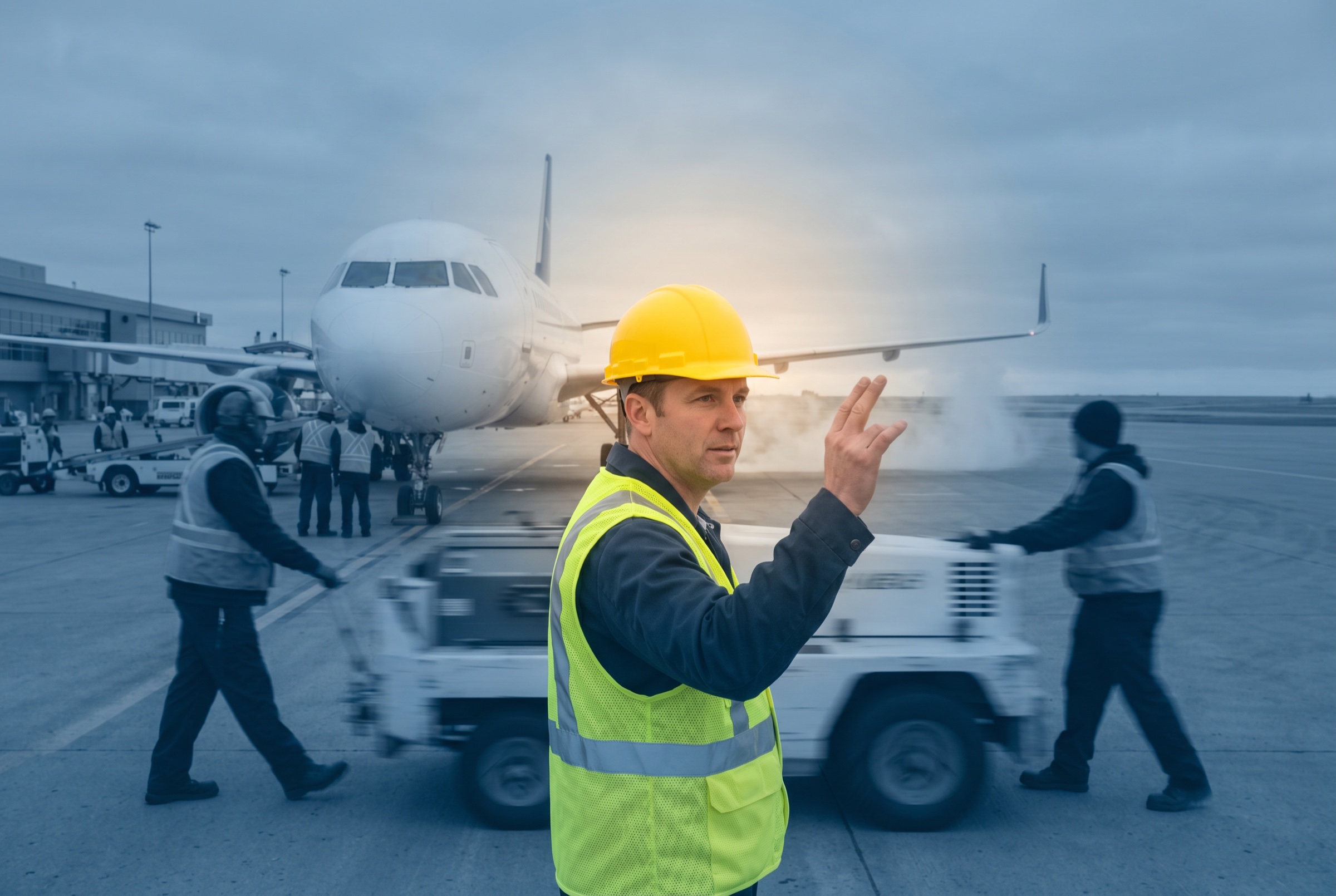
Commercial aircraft on tarmac at Edmonton International Airport, safety crew performing pre-flight checks
Back to Safety Insights
Safety Programs 2019-07-28 3 min read

Air Travel Safety

Alberta workers flying to remote worksites face unique hazards that most safety programs don't address. Know your rights, your employer's responsibilities, and what to do when something goes wrong at 35,000 feet.

Why Air Travel Safety Matters for Alberta Workers

With summer travel in full swing, and the recent news of an Air Canada flight’s emergency landing, now is the time to think safe in your travels.

What the Air Canada Emergency Landing Teaches Us

On July 11th, Air Canada Flight 33 from Toronto to Sydney, Australia was forced to make an emergency landing in Honolulu due to extreme turbulence – injuring 37 people. While flight turbulence may not have been preventable, most injuries were.

Top Flight Safety Tips from the Safety Ahead Team

From our team’s air travel experience, we at Safety Ahead would like to offer up our top flight safety tips for you to keep in mind this travel season and anytime you find yourself flying:

  • Seat Belts: as you know, wearing your seat belt during takeoff and landing is a must. But did you know that you should be wearing your belt the entire time you are seated during the flight? This is due to the unknown timing and location of turbulence, and the risk for injuries, movement of people, and items can happen quickly when the plane hits a rough patch of air. We too at Safety Ahead have experienced turbulence many times in the middle of a flight, while just trying to relax or even eat a snack. Having our seat belts always done up while sitting has helped prevent any unnecessary spills.
  • Oxygen Masks: should there be an emergency, or even if the air depressurizes, knowing how to use your oxygen mask is crucial. Always put your own mask on first before assisting others – you have probably heard this multiple times, but do you know why? In the case of a lack of oxygen, you will need to ensure you are alert and conscious, as you are no good to others should you pass out. Therefore, know how to use your mask, get it on, and then assist children or anyone incapable of putting the mask on themselves.
  • Lifejacket or Floatation Device: be sure to know where your personal lifejacket or floatation device is located. For most flights, this will be stored under your seat. Luckily, we at Safety Ahead have never had to use any of these devices on flight, but we also read the safety manual located at our seat to be prepared.
  • Emergency Exits: locate and know where the nearest Emergency Exit is to your seat on a plane. In the case of an emergency evacuation, being prepared for any situation (including a power outage or items blocking your way) by knowing where to go will help greatly. We sometimes like to even choose the option to sit at the Emergency Exit as it provides extra legroom and easy access should the case arise.
  • Emergency Slides: should you have to evacuate the plane, emergency slides may be inflated and deployed. Be sure to remove high-heeled shoes or anything that could puncture the slide in the case of an evacuation.
  • Take-Off Safety Orientation: one of the best and safest ways to enjoy your flight is to take the 5 minutes to watch and listen to the take-off safety orientation. At Safety Ahead, our team members have travelled to many different countries, and thankfully the safety orientation has always done in English and the native language. During this session you are provided all the safety information needed for your particular aircraft and flight. Demonstrations on how to use your seat belt, oxygen mask, floatation device and more are covered, and in the case of an emergency or time of panic, having this insight could save your life.

Before You Board: A Quick Pre-Flight Recap

Wishing you a happy and safe air-travels, wherever your next flight may take you!


Frequently Asked Questions

Always wear your seat belt while seated, know how to use your oxygen mask, locate your lifejacket or flotation device, and identify the nearest emergency exit on the plane.

Turbulence can occur unexpectedly at any time during the flight, and keeping your seat belt fastened helps prevent injuries caused by sudden movements.

Put your own mask on first to ensure you remain conscious and alert, then assist others such as children or those unable to put the mask on themselves.

Know the location of the nearest emergency exit, remove high-heeled shoes to avoid puncturing the emergency slide, and pay attention to the safety orientation provided at takeoff.

Written by

Safety Ahead Team

Alberta-based safety consultants with decades of field experience — COR auditors, OHS advisors, and WCB specialists working with employers across the province.

About Safety Ahead
More in Safety Programs All articles
Safety Program Development

Is your safety program actually working in the field?

We build and maintain Alberta safety programs that hold up under audit and inspection — hazard assessments, orientations, procedures, and ongoing support.

Request a program review Safety Program Checklist

In this article

  • Why Air Travel Safety Matters for Alberta Workers
  • What the Air Canada Emergency Landing Teaches Us
  • Top Flight Safety Tips from the Safety Ahead Team
  • Before You Board: A Quick Pre-Flight Recap
  • Frequently Asked Questions

Safety Program Development

Is your safety program actually working in the field?

Request a program review

Safety Ahead services

How our team can help with this in Alberta

  • Request a program review
  • Safety Program Checklist

Keep reading

More in Safety Programs

View all
Safety in Agriculture
3 min

Safety in Agriculture

Agricultural operations in Alberta face unique OHS challenges — seasonal workers, remote locations, and equipment hazards that most safety programs aren't built for. Here is what the OHS Act requires and what good practice looks like on a farm.

Read

Boating Safety Tips!
2 min

Boating Safety Tips!

Alberta employers whose workers operate boats — on lakes, rivers, or remote access routes — carry safety responsibilities that go beyond a life jacket. Here is what the OHS Act requires and what good practice looks like.

Read
When Safety Feels Like Friction — and What Leading Alberta Employers Do Differently
4 min

When Safety Feels Like Friction — and What Leading Alberta Employers Do Differently

How Safety Governance and Executive Oversight Strengthen Compliance and Inspection Readiness in Alberta

Read