780-473-4772info@safetyahead.ca
Mon–Fri 7:30–4:30 · Fri closes 12:00 MTClosed
Safety Ahead Ltd.Safety Ahead Ltd.
BlogStore
Book a Consultation
Safety Ahead Ltd.Safety Ahead Ltd.
780-473-4772Book a Consultation info@safetyahead.ca
Safety Ahead Ltd. LogoSafety Ahead Ltd.

Senior safety management and compliance consulting for Alberta contractors — and companies working across provincial and US borders.

Safety in a Box Store

Services

  • All Safety Consulting Services
  • OHS Orders & Compliance
  • COR program & certification
  • SECOR — Small Employer Info
  • Safety Program Development
  • Safety System Assessment
  • Fractional Safety Manager
  • Supervisor & Team Training
  • Contractor Prequalification
  • WCB Claims Case Management
  • Incident Investigation
  • Safety Services Across Alberta

Alberta coverage

  • Across Alberta
  • Edmonton & Area
  • Calgary & Southern Alberta
  • Red Deer & Central Alberta
  • Northern Alberta

Industries

  • All Industries
  • Construction & Civil
  • Oil, Gas & Energy
  • Trades & Subcontractors
  • Manufacturing & Fabrication
  • Transportation & Logistics
  • Engineering & Technical Consulting
  • Equipment Rental & Industrial Services
  • Electrical Contractors

Resources

  • All Free Resources
  • OHS Order Response Checklist
  • COR Audit Checklist
  • Safety Program Checklist
  • Alberta OHS Glossary
  • Safety Insights Blog
  • Client References

Company

  • About Us
  • Careers
  • Contact
  • Privacy Policy

Contact

  • 780-473-4772
  • info@safetyahead.ca
  • #201, 10404 66 Ave NW
    Edmonton, AB T6H 5R6

Credentials & Memberships

NCSO — National Construction Safety OfficerCHSC — Canadian Health & Safety ConsultantProud Member of the Alberta Construction Safety AssociationProud Member of the Edmonton Chamber of Commerce

© 2026 Safety Ahead Ltd. All rights reserved.

Privacy Policy·Contact·Safety in a Box Store

Scout — Safety Ahead

Back Tuesday at 7:30 AM MT

  1. Home
  2. Safety Insights
  3. Safety in Agriculture
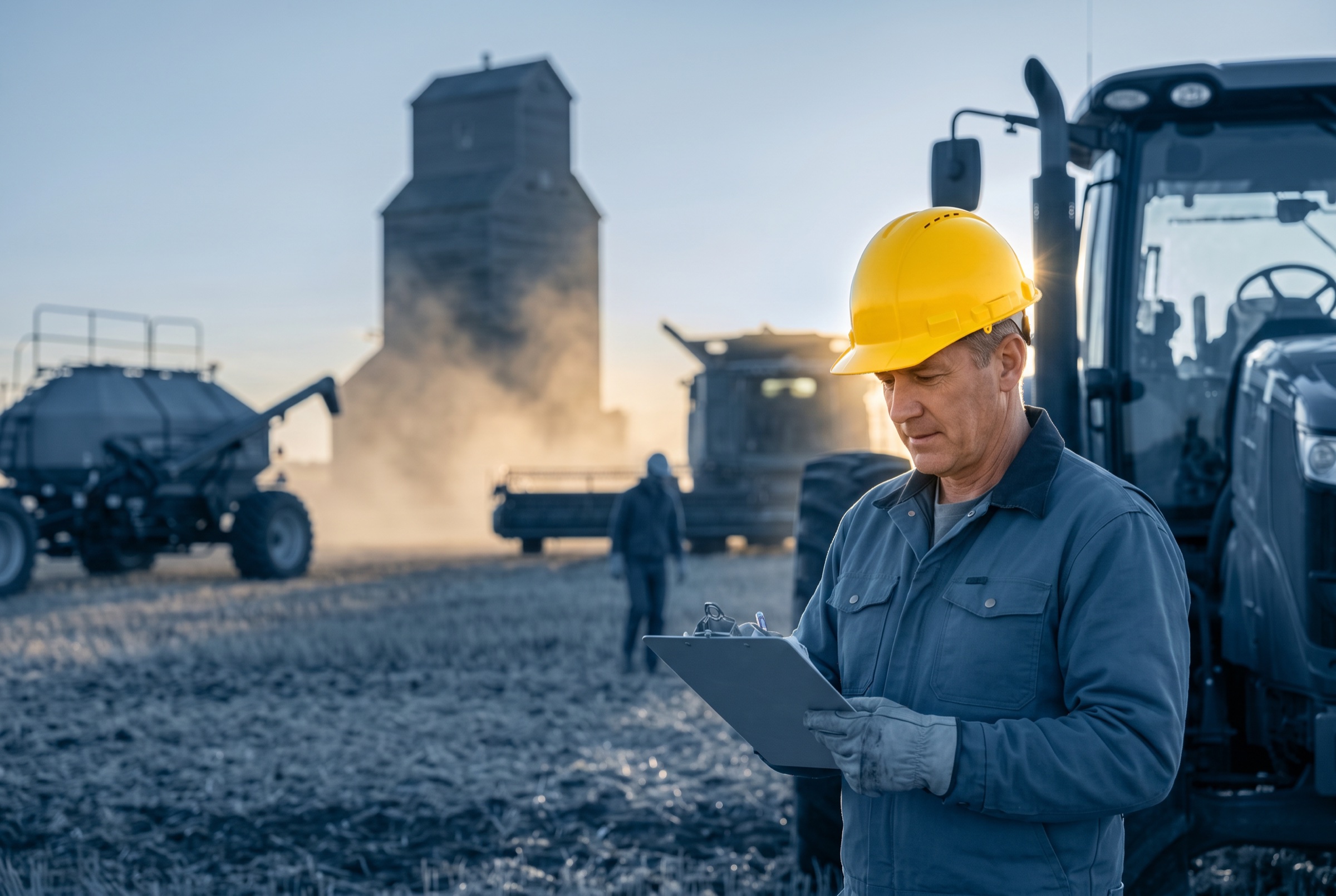
Alberta farmer and worker reviewing safety procedures near farm equipment, prairie horizon in background
Back to Safety Insights
Safety Programs 2019-08-27 3 min read

Safety in Agriculture

Agricultural operations in Alberta face unique OHS challenges — seasonal workers, remote locations, and equipment hazards that most safety programs aren't built for. Here is what the OHS Act requires and what good practice looks like on a farm.

As the season begins to change to fall, I can’t help but think of the autumn harvest. With an assortment of delicious fruits and vegetables in season, family dinners and gatherings are looked forward to by all. But did you know that the fall harvest can have some dangerous results when safety is not made a priority.

Why Agriculture Is One of Canada's Most Hazardous Industries

When researching this topic, I was shocked to find that the Farming and Agriculture Industry ranks as third most hazardous in Canada. In terms of the absolute numbers of fatalities, there is no more dangerous occupation! In an industry that tends to rely heavily on family involvement in offering free or affordable labour, yet submits its workers to some of the greatest risks, I began to question – at what price does this free labour cost?

In Canada, about 140 people are killed every year on farms, and of this, an average 10 deaths per year are children. For those aged 14 and under, the most prominent causes of farm-related deaths were: machines run-overs (41.9%), drownings (15.2%), machine rollovers (11.1%), animal-related (6.5%) and being crushed under an object (5.1%).

What Alberta OHS Requires on Farms and Ranches

Alberta's Occupational Health and Safety legislation applies to farm and ranch workplaces, requiring employers to provide a safe and healthy work environment for all workers, including family members and children who are working on the farm. While some exemptions may apply in limited circumstances, the general duty to ensure safety and the right of workers to refuse unsafe work remain in effect. Items covered in the Legislation include that employers must take reasonable steps to provide a safe and healthy workplace; workers will be able to refuse unsafe work that presents an imminent danger; and OHS will be able to investigate serious injuries and fatalities – but what is there to protect the children? Who is accountable when their life is taken at work on the farm?

Protecting Children and Visitors on the Farm

Yet safety on the farm does not just apply to those working on it. Many child fatalities have occurred from kids playing in dangerous and hazardous situations – such as the family farming tragedy just outside of Rocky Mountain House back in the fall of 2015 where three sisters were smothered by Canola seed while playing on a transport truck. Safety needs to be made a priority by all living, working and visiting farms or ranches.

Where Farm Owners Should Start

So where can farm and agricultural owners begin? The first step is education and awareness of the safety hazards on a property that will in the end save money and lives. Conducting a daily safety audit with a specific farming checklist that is reviewed with family and workers can be one of the most simple and effective ways in ensuring the property is safe. Machinery and equipment should be powered off, locked and keys made inaccessible to anyone that has not had the proper training on use of the equipment. If need be, areas and sections of the farm should be kept off limits from children or visitors that are not trained and equipped to deal with the hazards. Making safety a must on the farm needs to be a way of live.

This fall I encourage you to shop our local farmer’s market, let’s support our Alberta farmers – but in turn ask that farmers support their own and always remember that the safety of family and workers needs to come first in order to reap the most bountiful harvest.

Cited: Alberta Farm Safety Centre http://www.abfarmsafety.com/resources/statistics.htm

Frequently Asked Questions

The leading causes include machine run-overs, drownings, machine rollovers, animal-related incidents, and crushing injuries.

No, the Act does not apply to unpaid family members or children, but employers must still follow general OHS duties to ensure safe work practices for all workers. Alberta's OHS Act and Code apply to all workers on farms, including family members and children, with no special exemption. Employers must ensure health and safety for all workers regardless of employment status.

Conduct daily safety audits using a farm-specific checklist, lock out machinery when not in use, restrict access to untrained individuals, and clearly mark hazardous areas to reduce risks on Alberta farms.

Employers should seek fractional safety leadership or OHS consulting support when developing safety programs, preparing for COR audits, managing WCB claims, or improving contractor prequalification to maintain compliance and protect workers.

Written by

Safety Ahead Team

Alberta-based safety consultants with decades of field experience — COR auditors, OHS advisors, and WCB specialists working with employers across the province.

About Safety Ahead
More in Safety Programs All articles
Safety Program Development

Is your safety program actually working in the field?

We build and maintain Alberta safety programs that hold up under audit and inspection — hazard assessments, orientations, procedures, and ongoing support.

Request a program review Safety Program Checklist

In this article

  • Why Agriculture Is One of Canada's Most Hazardous Industries
  • What Alberta OHS Requires on Farms and Ranches
  • Protecting Children and Visitors on the Farm
  • Where Farm Owners Should Start
  • Frequently Asked Questions

Safety Program Development

Is your safety program actually working in the field?

Request a program review

Safety Ahead services

How our team can help with this in Alberta

  • Request a program review
  • Safety Program Checklist

Keep reading

More in Safety Programs

View all
Boating Safety Tips!
2 min

Boating Safety Tips!

Alberta employers whose workers operate boats — on lakes, rivers, or remote access routes — carry safety responsibilities that go beyond a life jacket. Here is what the OHS Act requires and what good practice looks like.

Read
What Makes a Good Safety Advisor?
2 min

What Makes a Good Safety Advisor?

A good safety advisor doesn't just know the regulations — they know how to make safety work in the real world of Alberta construction, oil and gas, and industrial operations. Here is what to look for when you're hiring.

Read
Air Travel Safety
3 min

Air Travel Safety

Alberta workers flying to remote worksites face unique hazards that most safety programs don't address. Know your rights, your employer's responsibilities, and what to do when something goes wrong at 35,000 feet.

Read