
2 min
Driving for Work and Alberta OHS: What Employers Should Know
How employer responsibility is evaluated when driving-related incidents occur
Read
What to Expect and How to Be Ready
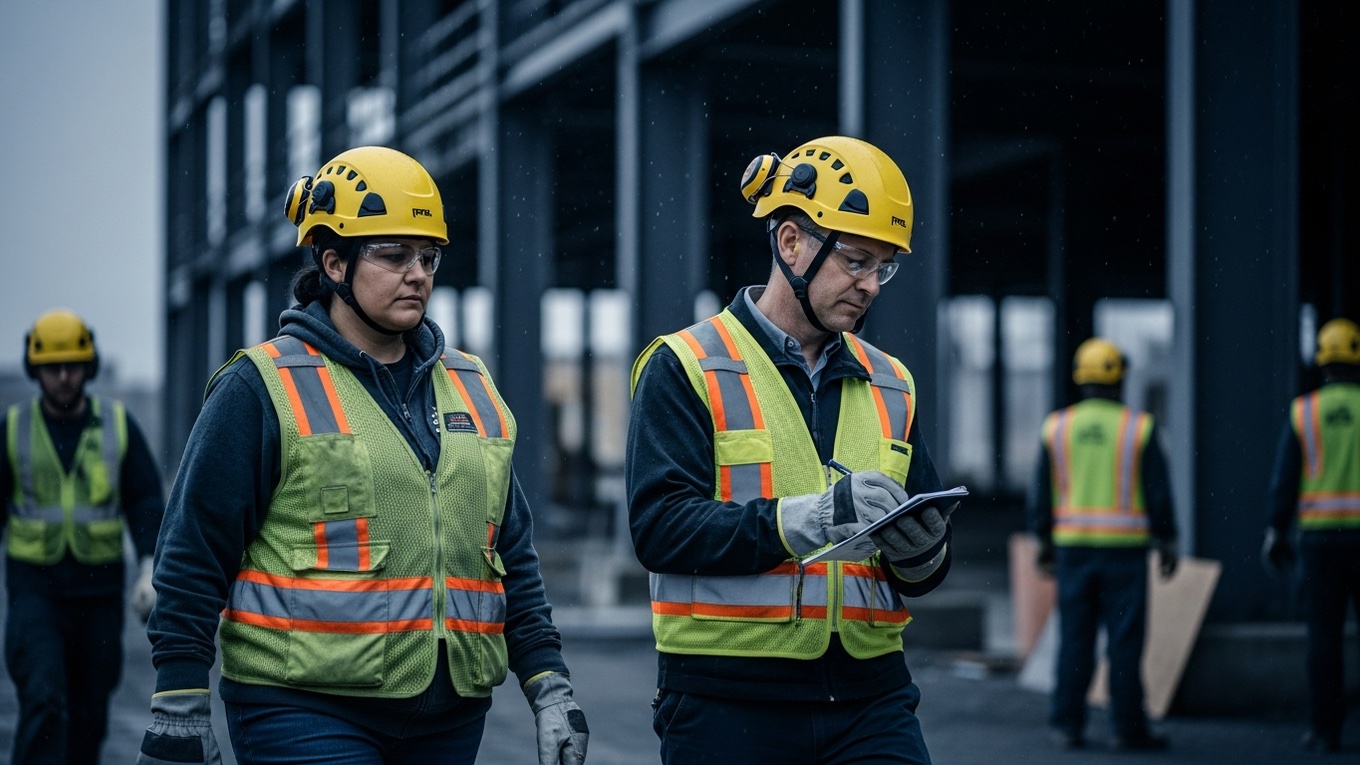
Several years ago, I was working on a commercial building project in South Common. It was a high-visibility site—surrounded by traffic and clearly visible from all directions. I had a strong sense that our site might draw the attention of Alberta OHS.
During our regular Thursday morning safety meeting, I warned the crew that there was a good chance we could receive a visit from an Occupational Health and Safety (OHS) officer. And sure enough, later that day, an older gentleman in an orange hard hat introduced himself as an OHS officer there to conduct an inspection.
He was knowledgeable and professional. He pointed out a few minor infractions that were easily corrected, and overall, things were going smoothly. Under Alberta OHS Code Part 9, workers exposed to fall hazards of 3 metres or more must use appropriate fall protection. Control zones can be used but must be clearly defined, enforced, and supplemented by fall protection measures as required. Employers must ensure that workers do not enter fall hazard areas without proper fall protection.
Everything was going well—until the unexpected happened.
A drywaller tied a rope to the handle of a chop saw and walked it to the edge of the roof, then lowered it down to the ground below. This clearly unsafe action immediately raised concerns. The officer reacted swiftly and sternly, explaining why this was unacceptable.
Unfortunately, before we could regroup, another worker walked up to the edge of the roof without fall protection. A Stop Work Order is a formal order issued under Section 33 of the OHS Act requiring immediate cessation of unsafe work. Officers may also issue a Client Contact Report (CCR) to document observations or concerns, but the Stop Work Order itself contains the specific instructions for compliance and timelines. Employers must follow the exact terms of the Stop Work Order to have it lifted.
Fortunately, I was able to quickly produce documentation from our safety meetings and training records to show that workers had been instructed on proper fall protection procedures. Because we were organized and cooperative, the Stop Work Order was lifted without delay.
This situation was a strong reminder that safety protocols are only effective if every worker follows them—consistently. One unsafe action by a single worker can compromise an entire site and result in costly downtime or worse, serious injury. Managing contractors can be very challenging.
The OHS Officer
To the officer’s credit, he took the time to explain the process, the risks, and the steps needed to improve. It was a constructive visit that ultimately helped us tighten up our procedures.
We need more officers like him—firm but fair, with a focus on helping worksites improve, not just punishing mistakes.
What to Expect from an OHS Site Inspection
We Can Help
At Safety Ahead Ltd., we’ve helped many clients respond to:
We understand how stressful and disruptive these situations can be—and we’re here to support you through the process, ensure compliance, and strengthen your workplace safety culture.
Remember: safety isn’t a one-time task. It’s a daily responsibility.
If you want to know how your operation would hold up under an OHS site inspection today, Safety Ahead's OHS compliance review gives Alberta employers an honest gap assessment before an inspector does.
Written by
Safety Ahead Team
Alberta-based safety consultants with decades of field experience — COR auditors, OHS advisors, and WCB specialists working with employers across the province.
About Safety AheadWe translate Alberta OHS legislation changes into plain-language action steps for your specific operation — so you stay compliant without the guesswork.
Safety Ahead services
Keep reading
How employer responsibility is evaluated when driving-related incidents occur

How Alberta OHS enforcement tests employer safety systems

How Safety Governance and Executive Oversight Strengthen Compliance and Inspection Readiness in Alberta