780-473-4772info@safetyahead.ca
Mon–Fri 7:30–4:30 · Fri closes 12:00 MTClosed
Safety Ahead Ltd.Safety Ahead Ltd.
BlogStore
Book a Consultation
Safety Ahead Ltd.Safety Ahead Ltd.
780-473-4772Book a Consultation info@safetyahead.ca
Safety Ahead Ltd. LogoSafety Ahead Ltd.

Senior safety management and compliance consulting for Alberta contractors — and companies working across provincial and US borders.

Safety in a Box Store

Services

  • All Safety Consulting Services
  • OHS Orders & Compliance
  • COR program & certification
  • SECOR — Small Employer Info
  • Safety Program Development
  • Safety System Assessment
  • Fractional Safety Manager
  • Supervisor & Team Training
  • Contractor Prequalification
  • WCB Claims Case Management
  • Incident Investigation
  • Safety Services Across Alberta

Alberta coverage

  • Across Alberta
  • Edmonton & Area
  • Calgary & Southern Alberta
  • Red Deer & Central Alberta
  • Northern Alberta

Industries

  • All Industries
  • Construction & Civil
  • Oil, Gas & Energy
  • Trades & Subcontractors
  • Manufacturing & Fabrication
  • Transportation & Logistics
  • Engineering & Technical Consulting
  • Equipment Rental & Industrial Services
  • Electrical Contractors

Resources

  • All Free Resources
  • OHS Order Response Checklist
  • COR Audit Checklist
  • Safety Program Checklist
  • Alberta OHS Glossary
  • Safety Insights Blog
  • Client References

Company

  • About Us
  • Careers
  • Contact
  • Privacy Policy

Contact

  • 780-473-4772
  • info@safetyahead.ca
  • #201, 10404 66 Ave NW
    Edmonton, AB T6H 5R6

Credentials & Memberships

NCSO — National Construction Safety OfficerCHSC — Canadian Health & Safety ConsultantProud Member of the Alberta Construction Safety AssociationProud Member of the Edmonton Chamber of Commerce

© 2026 Safety Ahead Ltd. All rights reserved.

Privacy Policy·Contact·Safety in a Box Store

Scout — Safety Ahead

Back Tuesday at 7:30 AM MT

  1. Home
  2. Safety Insights
  3. Working During COVID-19
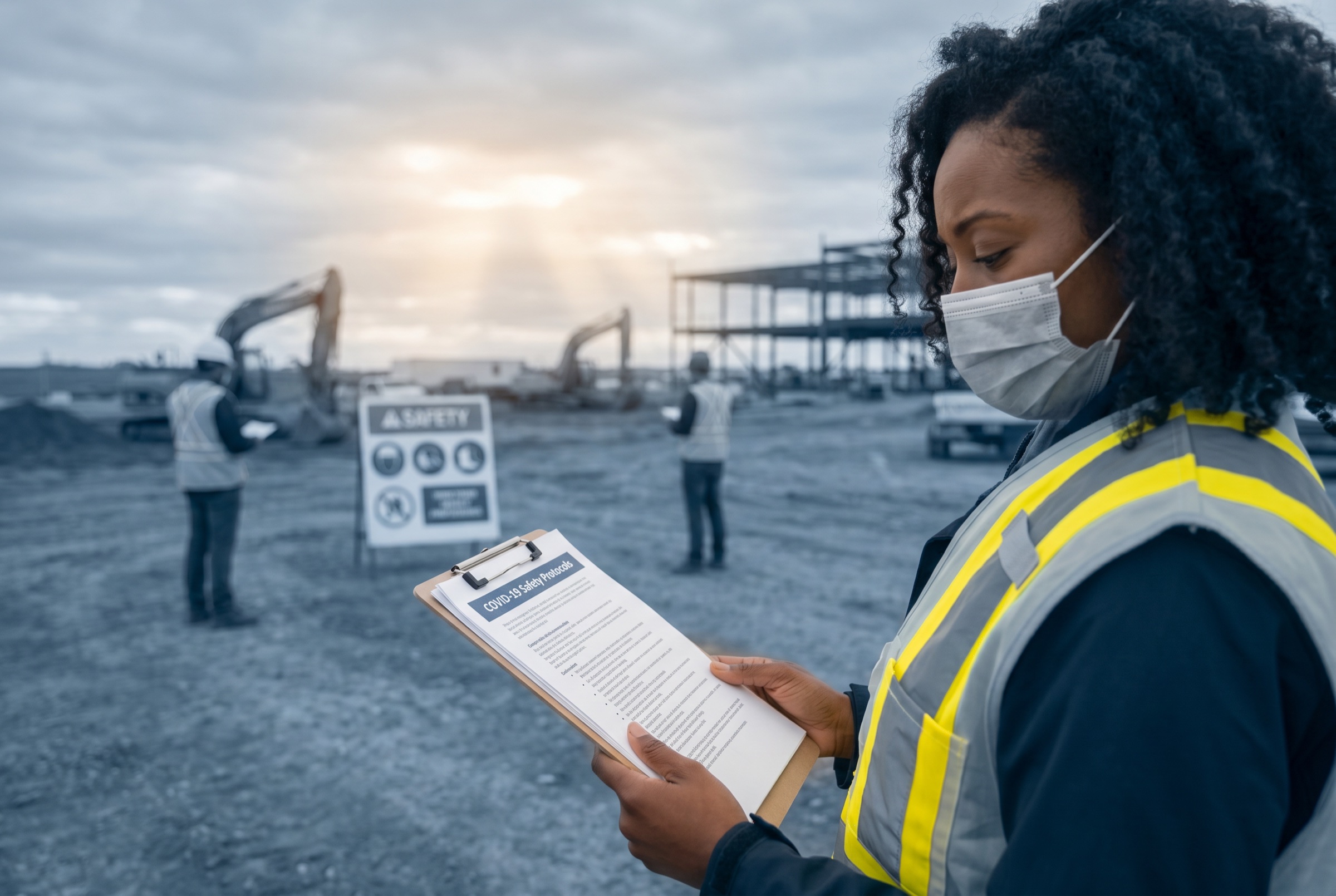
Alberta worker in PPE and mask at a job site during the COVID-19 pandemic
Back to Safety Insights
Seasonal Safety 2020-09-24 4 min read

Working During COVID-19

Alberta employers navigating COVID-19 had to balance OHS obligations, public health orders, and operational continuity simultaneously. Here is what the OHS Act required — and what good employers did beyond the minimum.

With COVID-19 spreading across the globe, some companies have been changing their working situations to allow their employees to work from home, but some companies are unable to do that and their employees still need to go into the office. This blog will give you some tips for whether you are either working from home or if you are back working in the office.

Tips while working from home

It’s very important to be diligent about practicing good hygiene practices at home as well as in the work environment as many of us have families and friends that we would like to protect from viral infection

Disinfection of home office and common areas

Ensure to disinfect all highly touched surfaces frequently. These surfaces include doorknobs, handrails, toilet handles, keypads, light switches, cabinet handles, faucet handles, tables, countertops, computer keyboards/mouse, electronics, etc.

Working alone process

The intent of the working alone practice is to promote workers awareness and facilitate worker safety when they are working alone. The Supervisor will ensure that there are safety plans in place for those that work alone and that these plans adhere to the OHS Legislation and the company policy.

Considerations when working alone:

  • How long are workers alone?
  • Is there a means of communication available such as a Cell Phone, 2-way Radio, Text Messaging and/or Email?
  • Will the communication system work in all circumstances or areas that the worker maybe?
  • Will a call-in be adequate?
  • What will be done if there is no response?
  • Would a buddy system work in your work environment where lone employees could call each other?
  • Do the workers know the workplace or is it unfamiliar?
  • How experienced are your workers? Are the workers competent to work alone?
  • How well trained are they to handle an emergency?

The procedure for checking a worker's well-being must include the time interval between checks and the procedure to follow in case the worker cannot be contacted, including provisions for emergency rescue.

In addition to checks at regular intervals, a check at the end of the work shift must be done. The procedure for checking a worker's well-being, including time intervals between the checks, must be developed in consultation with the Joint Health and Safety Committee or the worker health and safety representative, as applicable and with the worker assigned to or who do work alone or in isolation.

Tips while working from the office

It is very important to control the spread of viral infections in an office setting as there are many people that come and go from these types of locations. If good preventative measures are taken regularly to prevent the spread of viruses, it contributes to a healthy and safe workplace for all employees. Employers must conduct hazard assessments to determine appropriate PPE for cleaning and disinfecting tasks and provide necessary PPE accordingly.

Disinfection of Personal and Common Areas

Surfaces frequently touched with hands are the most likely to be contaminated with the COVID-19 virus, these areas will need to be disinfected regularly. These surfaces include:

  • doorknobs,
  • handrails,
  • toilet handles,
  • keypads,
  • elevator buttons,
  • light switches,
  • cabinet handles,
  • faucet handles,
  • tables,
  • countertops,
  • computer keyboards/mouse,
  • electronics, etc.

Sanitize your work area daily using alcohol-based cleansing wipes or a bleach and water mix.

  • If surfaces are dirty, they should be cleaned using a detergent or soap and water prior to disinfection.

Social distancing in the office

Employers should maintain general emergency response plans and update them as necessary to address workplace hazards, but there is no legal requirement for a specific pandemic emergency response plan under Alberta OHS law as of 2026. Ensure that employees that are showing symptoms of illness are sent home. Employers should implement appropriate controls to minimize close contact between workers based on hazard assessments and current public health guidance.

Masks in the Office

Employers must assess workplace hazards and implement appropriate controls, including PPE such as masks, based on current public health guidance and OHS hazard assessments. Municipal mask bylaws may vary and change over time and are not part of Alberta OHS legislation.

Limiting Meetings and Other in-person functions

It is important during this time to limit the amount of in person meetings and other functions (ex. Training) to avoid the potential spread of the virus. This can be done by conducting meetings via conference call or video call whenever possible. Meetings can also be held outdoors to be able to keep 2 meters (6.5 feet) apart and reducing the amount of people involved in the in-person meetings and functions.

For assistance in developing a Viral Pandemic Preparedness Program, Pandemic Novel Coronavirus (COVID-19) Emergency Response Plan or if you have any further questions, please call our office at 780-473-4772!

Frequently Asked Questions

Frequently disinfect high-touch surfaces like doorknobs, handrails, keyboards, and countertops with alcohol-based wipes or a bleach solution after cleaning with detergent or soap and water.

Employers must implement safety plans that include regular check-ins at least every two hours, reliable communication methods, emergency response procedures, and consultation with health and safety representatives.

Mask requirements depend on current Alberta Health Services orders; employers must follow the latest public health guidance and ensure workers wear masks in indoor public areas or where physical distancing is not possible.

Employers should seek help from safety consultants for developing COVID-19 safety programs, managing WCB claims, preparing for COR audits, contractor prequalification, or when they need fractional safety leadership to maintain OHS compliance.

Is your safety program keeping up with seasonal changes?

Download our free Safety Program Gap Assessment — find the gaps before Alberta's next season creates a hazard your program doesn't cover.

Download Free Assessment

Written by

Safety Ahead Team

Alberta-based safety consultants with decades of field experience — COR auditors, OHS advisors, and WCB specialists working with employers across the province.

About Safety Ahead
More in Seasonal Safety All articles
Seasonal Safety

Is your team prepared for Alberta's seasonal hazards?

We help Alberta employers build seasonal safety plans and emergency response procedures that actually get followed in the field — not just filed in a binder.

Talk to our team Our Safety Services

In this article

  • Tips while working from home
  • Disinfection of home office and common areas
  • Working alone process
  • Tips while working from the office
  • Disinfection of Personal and Common Areas
  • Social distancing in the office
  • Masks in the Office
  • Limiting Meetings and Other in-person functions
  • Frequently Asked Questions

Seasonal Safety

Is your team prepared for Alberta's seasonal hazards?

Talk to our team

Safety Ahead services

How our team can help with this in Alberta

  • Talk to our team
  • Our Safety Services

Keep reading

More in Seasonal Safety

View all
What Makes a Good Safety Advisor?
2 min

What Makes a Good Safety Advisor?

A good safety advisor doesn't just know the regulations — they know how to make safety work in the real world of Alberta construction, oil and gas, and industrial operations. Here is what to look for when you're hiring.

Read
Covid-19 Restriction Changes
3 min

Covid-19 Restriction Changes

Alberta's COVID-19 restriction changes created new compliance questions for employers. Here is what changed, what stayed in place, and how to keep your workplace aligned with current OHS requirements.

Read
Health and Safety Committee Legislation Changes
2 min

Health and Safety Committee Legislation Changes

Alberta's OHS legislation changes redefined when joint health and safety committees are required and what they must do. If you have 20 or more workers, this directly affects your compliance obligations.

Read