780-473-4772info@safetyahead.ca
Mon–Fri 7:30–4:30 · Fri closes 12:00 MTClosed
Safety Ahead Ltd.Safety Ahead Ltd.
BlogStore
Book a Consultation
Safety Ahead Ltd.Safety Ahead Ltd.
780-473-4772Book a Consultation info@safetyahead.ca
Safety Ahead Ltd. LogoSafety Ahead Ltd.

Senior safety management and compliance consulting for Alberta contractors — and companies working across provincial and US borders.

Safety in a Box Store

Services

  • All Safety Consulting Services
  • OHS Orders & Compliance
  • COR program & certification
  • SECOR — Small Employer Info
  • Safety Program Development
  • Safety System Assessment
  • Fractional Safety Manager
  • Supervisor & Team Training
  • Contractor Prequalification
  • WCB Claims Case Management
  • Incident Investigation
  • Safety Services Across Alberta

Alberta coverage

  • Across Alberta
  • Edmonton & Area
  • Calgary & Southern Alberta
  • Red Deer & Central Alberta
  • Northern Alberta

Industries

  • All Industries
  • Construction & Civil
  • Oil, Gas & Energy
  • Trades & Subcontractors
  • Manufacturing & Fabrication
  • Transportation & Logistics
  • Engineering & Technical Consulting
  • Equipment Rental & Industrial Services
  • Electrical Contractors

Resources

  • All Free Resources
  • OHS Order Response Checklist
  • COR Audit Checklist
  • Safety Program Checklist
  • Alberta OHS Glossary
  • Safety Insights Blog
  • Client References

Company

  • About Us
  • Careers
  • Contact
  • Privacy Policy

Contact

  • 780-473-4772
  • info@safetyahead.ca
  • #201, 10404 66 Ave NW
    Edmonton, AB T6H 5R6

Credentials & Memberships

NCSO — National Construction Safety OfficerCHSC — Canadian Health & Safety ConsultantProud Member of the Alberta Construction Safety AssociationProud Member of the Edmonton Chamber of Commerce

© 2026 Safety Ahead Ltd. All rights reserved.

Privacy Policy·Contact·Safety in a Box Store

Scout — Safety Ahead

Back Tuesday at 7:30 AM MT

  1. Home
  2. Safety Insights
  3. A Serious Incident That Triggered an OHS Demand for Proof of Subcontractor Safety
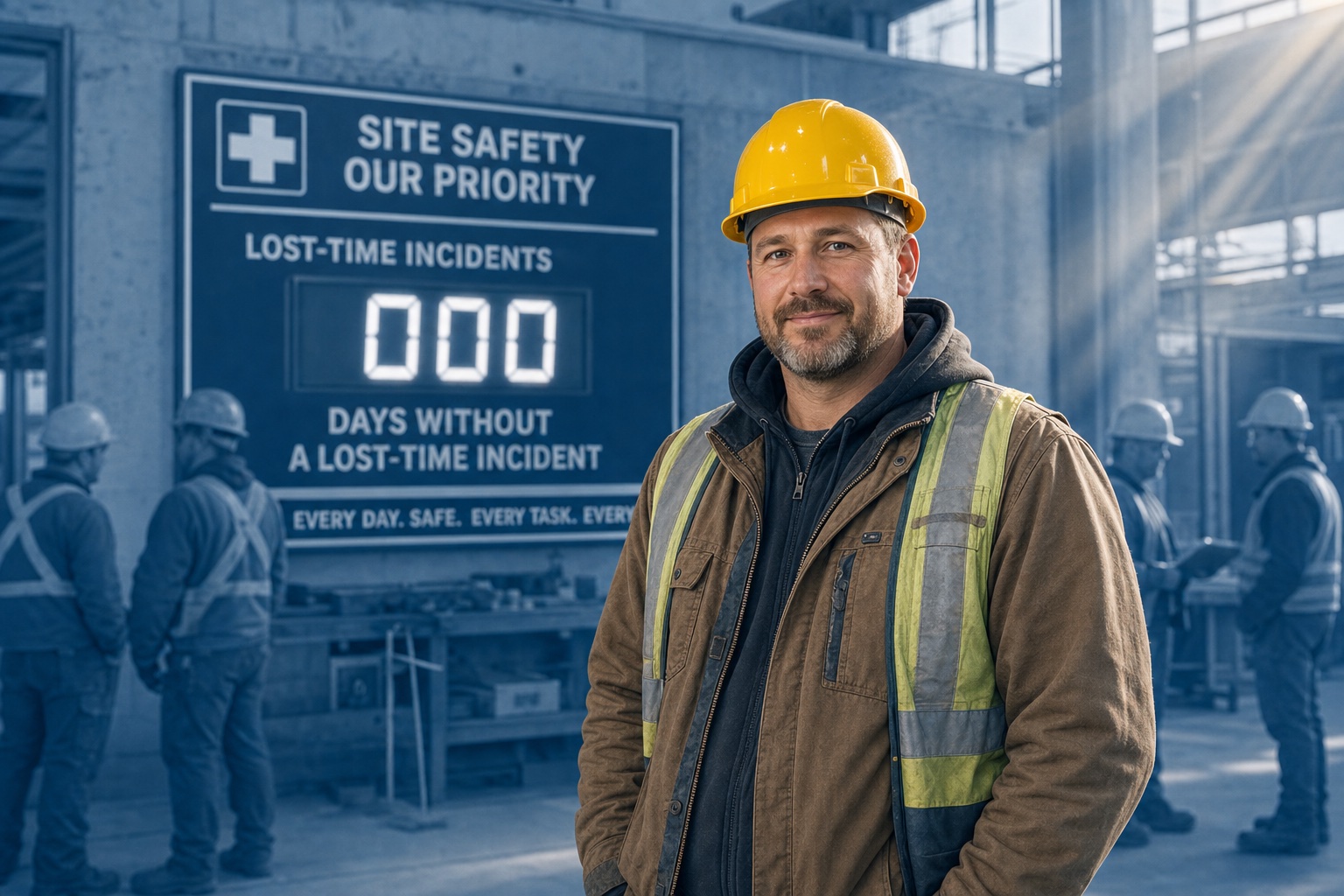
Alberta Court of King's Bench building in Edmonton, OHS enforcement context
Back to Safety Insights
Incident Management 2026-04-02 4 min read

A Serious Incident That Triggered an OHS Demand for Proof of Subcontractor Safety

Why a subcontractor compliance program I thought was overkill became critical to my business

We were growing quickly and starting to take on larger, more complex work. We had just gotten COR (Certificate of Recognition) certified, and we also had a long-term supervisor step into a safety role after completing their NCSO program. From my perspective, we were in a good place.

As our projects expanded, so did the number and type of subcontractors on our sites. I was aware that when there were multiple employers on site, there needed to be a prime contractor — and in our case, that was us.

What I didn’t fully understand was how far that responsibility actually extended when it came to subcontractors. I knew they had to meet safety requirements, and at the time, that seemed like a reasonable assumption based on how we had been operating.

As we brought on more subcontractors across different types of work, I started to realize I wasn’t fully clear on what we were actually expected to be verifying. From talking to other business owners running similar operations, it was a common way of operating at that stage.

Then I heard about a friend. Similar size company, similar type of work. He had an incident on one of his sites involving a subcontractor, and when Alberta OHS got involved, he ended up facing charges as the business owner.

That stuck with me. It wasn’t that he didn’t care about safety — he just assumed the subcontractor had it handled.

Could that happen to me?

This is based on a real situation. Certain details have been modified to protect privacy while preserving the accuracy of the events.

We had strong supervisors who understood the safety requirements of the work they were doing. That wasn’t where the gap was.

The challenge was understanding how Alberta’s Occupational Health and Safety legislation actually applied across multiple employers — and how that needed to be managed as we brought more subcontractors onto our sites.

We brought in a fractional safety management company — experienced consultants who worked with us about one day a week, providing senior-level support on retainer—without adding a full-time safety employee to payroll.

Part of what they helped us put in place was a consistent system to evaluate and manage subcontractors before they stepped on site, including prequalification, verification of competency, and ongoing monitoring.

At the time, I thought this program was overkill.

Not long after that, we had an incident. One of the subcontractors on site had a serious head injury because he wasn’t wearing a hardhat. It happened quickly — the kind of situation that doesn’t seem significant until it is — and then Alberta OHS got involved.

They weren’t just asking what happened — they gave us a client contact report with a demand notice. They wanted to see how we were managing safety across the entire worksite, including subcontractors, and how we were coordinating multiple employers operating at the same site.

We were asked to provide:

  • Contractor prequalification and selection records
  • Proof of training and competency verification
  • Site orientations and onboarding documentation
  • Hazard assessments related to the work
  • Records showing how work was supervised and coordinated
  • Documentation of how contractor safety performance was monitored
  • Any records of non-compliance and corrective actions
  • Our incident investigation documentation

Because we had been working with that safety consultant company, we were able to demonstrate how subcontractor safety had been evaluated, verified, and managed across our worksite.

In the end, we were not held responsible for the incident.

That was a level of relief I can’t really describe.

Looking back, one thing stands out clearly. At the time, I thought this program was overkill. I didn’t realize it was the only thing protecting my business — and me as the owner.

It also changed how I think about subcontractors. Bringing them onto our site didn’t reduce responsibility — it increased it. If they’re part of the work, accountability still sits with us under Alberta law.

Bringing in outside support wasn’t about adding paperwork. It was about making sure our systems kept pace with how quickly the scope of our work was expanding — and that if something happened, we could prove we had done what was required.

Executive Takeaways

  • I assumed subcontractors were managing their own safety — but that didn’t remove my responsibility under Alberta’s Occupational Health and Safety Legislation
  • As we hired more employers on our sites, the level of coordination and oversight expected from us increased
  • When Alberta OHS got involved, they didn’t just look at the incident — they looked at how the entire worksite was being managed
  • I was so relieved that we built an effective contractor compliance program with all needed documentation that helped us to avoid a fine
  • Expert advice really made a huge difference in the outcome of this event

Could You Prove It Today?

If you’re relying on subcontractors across your work, it may be worth taking a closer look at how that responsibility is being managed — especially before you’re asked to demonstrate it.

A structured Safety System Assessment through Safety Ahead provides a clear view of how your current approach aligns with Alberta OHS expectations — and where gaps may exist.

Dealing with an OHS demand after a serious incident? We help Alberta contractors respond quickly and get things back on track.

Request a Safety Consultation

Frequently Asked Questions

Alberta prime contractors are required to ensure subcontractors comply with OHS legislation by coordinating worksite safety, verifying subcontractor competency, conducting hazard assessments, and supervising work to prevent incidents.

Alberta OHS requires timely submission of records such as subcontractor prequalification, training verification, site orientations, hazard assessments, supervision logs, and incident investigation reports as part of their investigation process.

A safety consultant like Safety Ahead Ltd can develop tailored subcontractor management systems, support COR audit preparation, assist with WCB claims management, and provide expert guidance to ensure ongoing compliance and reduce liability risks.

Alberta employers should consider hiring a fractional safety advisor when they need expert support to develop safety programs, manage subcontractor compliance, prepare for OHS inspections, or improve overall safety leadership on retainer—without adding full-time safety staff to payroll.---

Received an OHS order after the incident?

Download our free OHS Order Response Checklist — step-by-step guidance from reading the order to submitting your written response.

Download Free Checklist

Written by

Safety Ahead Team

Alberta-based safety consultants with decades of field experience — COR auditors, OHS advisors, and WCB specialists working with employers across the province.

About Safety Ahead
More in Incident Management All articles
Incident Investigation

Had a serious incident on your site?

Alberta OHS requires a formal investigation for serious incidents. We help employers respond correctly, document thoroughly, and protect their business from regulatory exposure.

Talk to our team Incident Investigation

In this article

  • Executive Takeaways
  • Request a Safety Consultation
  • Frequently Asked Questions

Incident Investigation

Had a serious incident on your site?

Talk to our team

Safety Ahead services

How our team can help with this in Alberta

  • Talk to our team
  • Incident Investigation

Keep reading

More in Incident Management

View all
Bill 30: Safety Program Requirements
2 min

Bill 30: Safety Program Requirements

Bill 30 changed what Alberta employers are legally required to include in their safety programs. If your program hasn't been updated since 2018, it may no longer meet the minimum standard under the OHS Act.

Read
No Incidents Reported—Was My Business Actually Safe?
4 min

No Incidents Reported—Was My Business Actually Safe?

A serious incident revealed what wasn't being reported. No incidents on paper doesn't mean no risk on site — it often means the reporting stopped. Here's what we learned when everything looked fine, and then it wasn't.

Read
The 5 Safety Assumptions That Keep Costing Alberta Businesses
5 min

The 5 Safety Assumptions That Keep Costing Alberta Businesses

Lessons from the field — what I’ve seen go wrong (and how I’ve learned to prevent it)

Read