780-473-4772info@safetyahead.ca
Mon–Fri 7:30–4:30 · Fri closes 12:00 MTClosed
Safety Ahead Ltd.Safety Ahead Ltd.
BlogStore
Book a Consultation
Safety Ahead Ltd.Safety Ahead Ltd.
780-473-4772Book a Consultation info@safetyahead.ca
Safety Ahead Ltd. LogoSafety Ahead Ltd.

Senior safety management and compliance consulting for Alberta contractors — and companies working across provincial and US borders.

Safety in a Box Store

Services

  • All Safety Consulting Services
  • OHS Orders & Compliance
  • COR program & certification
  • SECOR — Small Employer Info
  • Safety Program Development
  • Safety System Assessment
  • Fractional Safety Manager
  • Supervisor & Team Training
  • Contractor Prequalification
  • WCB Claims Case Management
  • Incident Investigation
  • Safety Services Across Alberta

Alberta coverage

  • Across Alberta
  • Edmonton & Area
  • Calgary & Southern Alberta
  • Red Deer & Central Alberta
  • Northern Alberta

Industries

  • All Industries
  • Construction & Civil
  • Oil, Gas & Energy
  • Trades & Subcontractors
  • Manufacturing & Fabrication
  • Transportation & Logistics
  • Engineering & Technical Consulting
  • Equipment Rental & Industrial Services
  • Electrical Contractors

Resources

  • All Free Resources
  • OHS Order Response Checklist
  • COR Audit Checklist
  • Safety Program Checklist
  • Alberta OHS Glossary
  • Safety Insights Blog
  • Client References

Company

  • About Us
  • Careers
  • Contact
  • Privacy Policy

Contact

  • 780-473-4772
  • info@safetyahead.ca
  • #201, 10404 66 Ave NW
    Edmonton, AB T6H 5R6

Credentials & Memberships

NCSO — National Construction Safety OfficerCHSC — Canadian Health & Safety ConsultantProud Member of the Alberta Construction Safety AssociationProud Member of the Edmonton Chamber of Commerce

© 2026 Safety Ahead Ltd. All rights reserved.

Privacy Policy·Contact·Safety in a Box Store

Scout — Safety Ahead

Back Tuesday at 7:30 AM MT

  1. Home
  2. Safety Insights
  3. Working in Hot Conditions
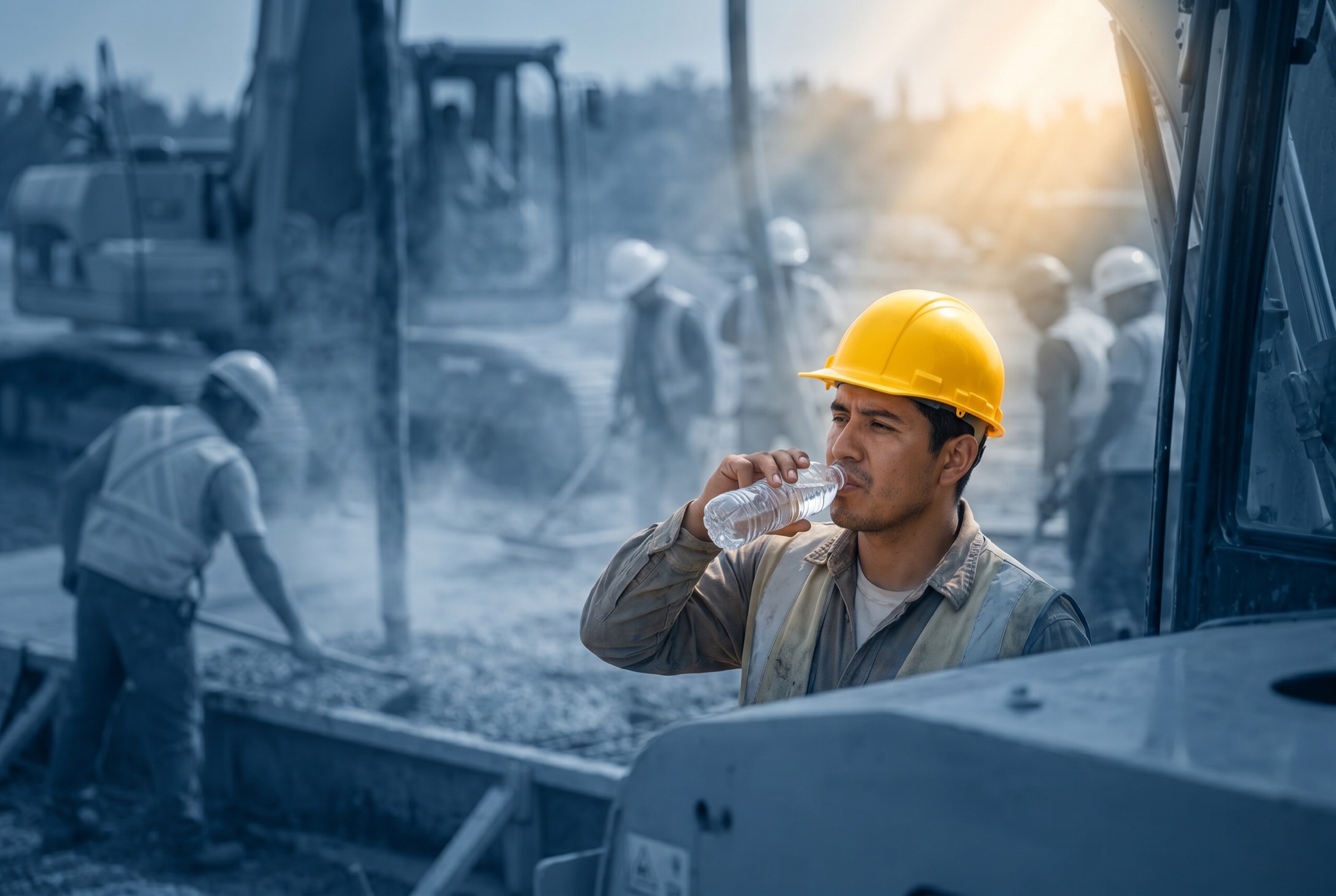
Alberta worker in a yellow hard hat drinking water on a hot summer day, heat haze visible
Back to Safety Insights
Safety Programs 2020-07-29 3 min read

Working in Hot Conditions

Heat stress is a recognized workplace hazard under Alberta's OHS Act, and employers have a duty to protect workers when temperatures rise. Here is what the legislation requires and what a practical heat illness prevention plan looks like.

When the summer months come along, so do the heat advisories. Temperature extremes can become dangerous to your health. When working in conditions with excessive exposure to heat, heat illnesses are a concern since heat stroke is a possibility. Heat stroke can become lift threatening if not treated immediately. When I was researching for this blog, I didn’t know the different symptoms and treatments for each type of heat illness. I suggest that everyone know and understand the different symptoms and treatments that go along with each heat illness, since it could save a life.

Determining hot working conditions depends on a number of factors such air temperature, humidity, presence of hot objects in the area, air movement, physical exertion work environment and the clothing worn. Once the conditions have been addressed and evaluated, control measures can be put in place to protect the yourself and others.

You can be challenged in a number of ways when exposed to temperature extremes. Air temperature, air movement, and humidity are all factors that need to be considered when determining protective clothing and exposure levels for the physical activity.

Recognize the signs of heat stroke and other related heat illnesses. Being aware of the signs and symptoms related to a heat illness can help keep you and the lives of others safe.

Heat Illness

Symptoms

Treatment

Heat Stroke

  • Confusion, altered mental state, slurred speech
  • Loss of consciousness
  • Hot, dry skin
  • Seizures
  • Very high body temperature
  • Call 911
  • Move the person to a shaded, cool area
  • Remove any unnecessary clothing
  • Cool the person quickly with a cold water or ice bath

Heat Exhaustion

  • Headache
  • Dizziness, nausea
  • Weakness
  • Heavy sweating
  • Elevated body temperature
  • Move person to shaded area
  • Give the person a cool water to drink

Heat Cramps

  • Muscle cramps in the legs, arms or abdomen
  • Drink water as well as electrolyte replacement
  • Rest for at least 1 hour and seek medical attention if cramps have not subsided

Heat Rash

  • Red clusters that look like small blisters
  • Move to a cooler environment
  • Keep rash area dry

Hot Conditions

Some ways to help prevent a heat illness during these summer months include:

  • Employers must assess heat hazards and implement appropriate controls such as ventilation, air movement, or administrative measures to protect workers from heat exposure.
  • Employers must assess all relevant factors such as temperature, humidity, workload, and clothing to determine when controls and precautions are necessary to protect workers from heat-related hazards.
  • Workers should stay hydrated by drinking water or other fluids regularly while working in hot conditions. Employers should provide access to potable water.
  • You need to protect yourself from over exposure from the sun as well as insects. Wear work and weather appropriate clothing. Clothing should be layered and light in weight and color and should be loose fitting to speed up evaporation. Fabric should be of a type that allows perspiration to evaporate easily.
  • If you are working outdoors, ensure to wear sunglasses or tinted safety glasses if permitted and use sunscreen of appropriate sun protection factor. Wear insect repellent to protect against insect bites.
  • Ensure to take frequent rest breaks in a shaded or cooled area. Employers must train workers to recognize symptoms of heat-related illness and have procedures in place for reporting and responding to such incidents.

Frequently Asked Questions

Symptoms of heat stroke include confusion, altered mental state, slurred speech, loss of consciousness, hot dry skin, seizures, and a very high body temperature.

Alberta employers must provide heat stress training, monitor workers for symptoms, regulate workplace temperature with fans or air conditioning, provide shaded rest areas and drinking water, and enforce appropriate clothing and sun protection.

Move the worker to a shaded area, remove excess clothing, apply cool water or ice packs, provide cool water to drink, and seek medical help if symptoms worsen or do not improve.

Employers should consider fractional safety leadership or OHS consulting services to develop heat stress programs, support COR audits, manage WCB claims, and ensure compliance with Alberta OHS heat illness requirements.

Written by

Safety Ahead Team

Alberta-based safety consultants with decades of field experience — COR auditors, OHS advisors, and WCB specialists working with employers across the province.

About Safety Ahead
More in Safety Programs All articles
Safety Program Development

Is your safety program actually working in the field?

We build and maintain Alberta safety programs that hold up under audit and inspection — hazard assessments, orientations, procedures, and ongoing support.

Request a program review Safety Program Checklist

In this article

  • Heat Illness
  • Heat Stroke
  • Heat Exhaustion
  • Heat Cramps
  • Heat Rash
  • Hot Conditions
  • Frequently Asked Questions

Safety Program Development

Is your safety program actually working in the field?

Request a program review

Safety Ahead services

How our team can help with this in Alberta

  • Request a program review
  • Safety Program Checklist

Keep reading

More in Safety Programs

View all
Fire Safety Plan
3 min

Fire Safety Plan

Alberta employers are required to have a fire safety plan — but most plans sit in a binder and never get tested. Here is what a compliant, practical fire safety plan looks like and how to make sure your workers actually know what to do.

Read

Can Your Workers Spot the Signs of Heat Illness?
3 min

Can Your Workers Spot the Signs of Heat Illness?

Training your workers to spot the signs of heat illness early can save lives.

Read
Domestic Violence & OHS
4 min

Domestic Violence & OHS

Alberta's OHS legislation now recognizes domestic violence as a workplace hazard when it creates a risk to a worker at work. Employers have a legal duty to respond — here is what that means in practice.

Read