
780-473-4772info@safetyahead.ca
Mon–Fri 7:30–4:30 · Fri closes 12:00 MTClosed
Safety Ahead Ltd.Safety Ahead Ltd.
BlogStore
Book a Consultation
Safety Ahead Ltd.Safety Ahead Ltd.
780-473-4772Book a Consultation info@safetyahead.ca
Safety Ahead Ltd. LogoSafety Ahead Ltd.

Senior safety management and compliance consulting for Alberta contractors — and companies working across provincial and US borders.

Safety in a Box Store

Services

  • All Safety Consulting Services
  • OHS Orders & Compliance
  • COR program & certification
  • SECOR — Small Employer Info
  • Safety Program Development
  • Safety System Assessment
  • Fractional Safety Manager
  • Supervisor & Team Training
  • Contractor Prequalification
  • WCB Claims Case Management
  • Incident Investigation
  • Safety Services Across Alberta

Alberta coverage

  • Across Alberta
  • Edmonton & Area
  • Calgary & Southern Alberta
  • Red Deer & Central Alberta
  • Northern Alberta

Industries

  • All Industries
  • Construction & Civil
  • Oil, Gas & Energy
  • Trades & Subcontractors
  • Manufacturing & Fabrication
  • Transportation & Logistics
  • Engineering & Technical Consulting
  • Equipment Rental & Industrial Services
  • Electrical Contractors

Resources

  • All Free Resources
  • OHS Order Response Checklist
  • COR Audit Checklist
  • Safety Program Checklist
  • Alberta OHS Glossary
  • Safety Insights Blog
  • Client References

Company

  • About Us
  • Careers
  • Contact
  • Privacy Policy

Contact

  • 780-473-4772
  • info@safetyahead.ca
  • #201, 10404 66 Ave NW
    Edmonton, AB T6H 5R6

Credentials & Memberships

NCSO — National Construction Safety OfficerCHSC — Canadian Health & Safety ConsultantProud Member of the Alberta Construction Safety AssociationProud Member of the Edmonton Chamber of Commerce

© 2026 Safety Ahead Ltd. All rights reserved.

Privacy Policy·Contact·Safety in a Box Store

Scout — Safety Ahead

Back Tuesday at 7:30 AM MT

  1. Home
  2. Safety Insights
  3. Working in Severe Weather
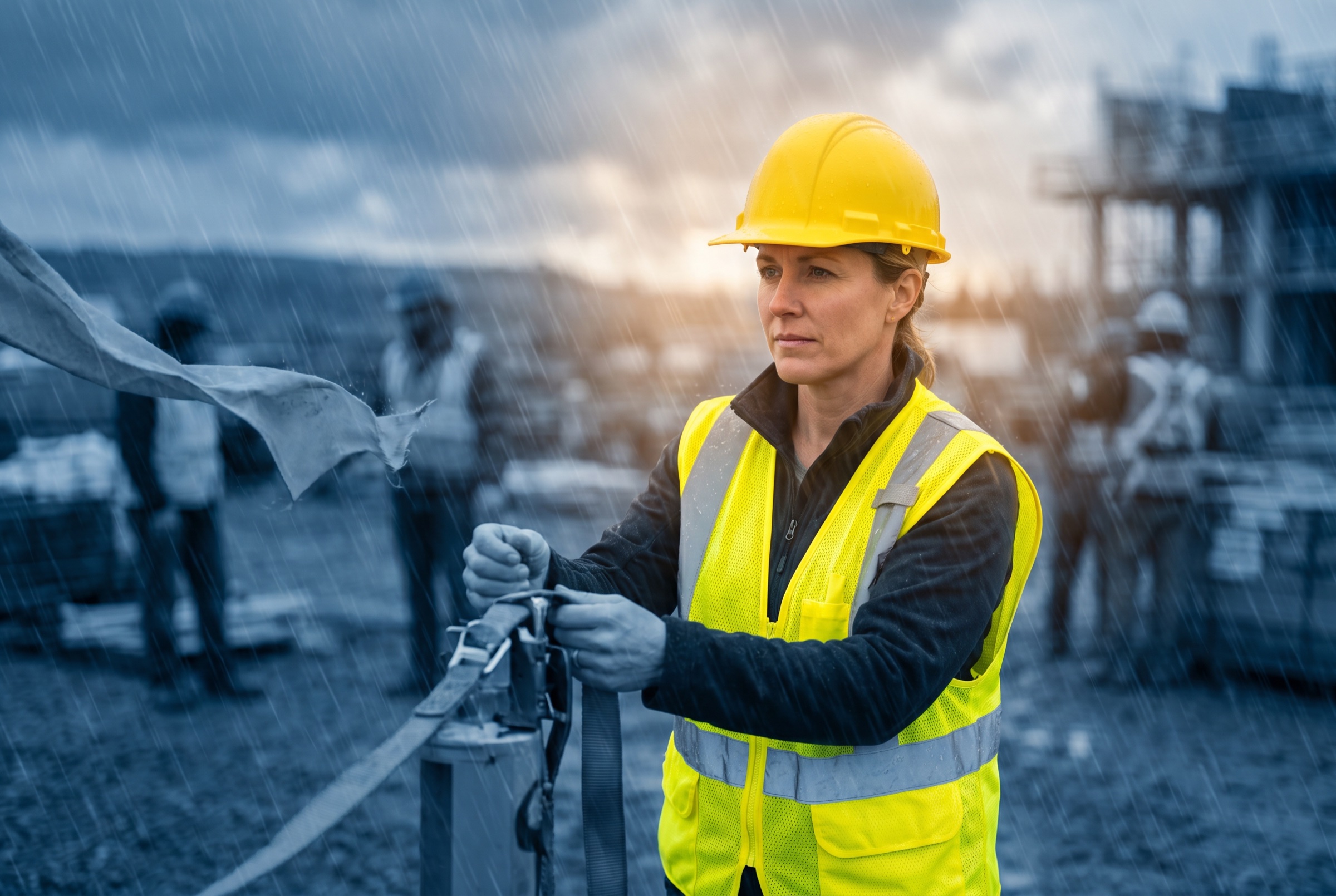
Alberta workers securing equipment in severe weather, dark storm clouds on the prairie horizon
Back to Safety Insights
Seasonal Safety 2018-08-01 2 min read

Working in Severe Weather

The Do's and Don'ts

30 / 30 Rule

If thunderstorms are in the forecast, re-assess your daily plan. Lightning can strike several kilometers away from the source of the storm. If you can hear thunder, the storm is not far from you. You are considered in the high danger zone if you are less than 10 kilometers away. To figure out how far away you are, use the 30 / 30 Rule:

  • When you see lighting, count the time until you hear thunder. If you can count up to 30 seconds or less than you must seek shelter immediately.
  • Do not resume any outdoor activities until you have waited at least 30 minutes after hearing the last clap of thunder, .

You must ensure that the risk of a lightning strike has passed completely. It is very important to know what to do, and what not to do. It is a very bad idea to use a tree to protect yourself because electricity from the lightning strike could hit the tree, run down the trunk, passing through the roots and into the ground.

Do:

  • Stay clear of high ground and open spaces.
  • Seek shelter in a house, large building or motor vehicle. Keep windows and doors shut.
  • If you are in a flat, open field, assume the “lightning crouch”, bend down keep your head tucked to your chest or between your knees and put your hands on your knees. Maintain minimum contact with the ground (keep on the balls of your feet).
  • Keep yourself at least 15 – 30 meters (50 – 100 feet) apart from another person.
  • Avoid contact with metal. Stay at least 30 meters (100 feet) away from metal fences and take off shoes that have metal cleats.
  • Stay away from water, including lakes and puddles.
  • Stay sheltered until the storm is over, refer to the 30 / 30 Rule.

Do Not:

  • Don’t seek shelter under a tree, in a shed or in a small, open building.
  • Don’t lie on the ground.
  • Don’t use the phone or electrical appliances unless absolutely necessary.
  • Don’t use mobile phone outdoors during a lightning storm.
  • Don’t travel in a severe storm. If you are caught in your car, open the windows a bit and park the car off the road away from power lines.
  • Don’t try to finish your activity.

If you have any questions or would like Safety Ahead to develop a working in severe weather program call us today!


Frequently Asked Questions

The 30/30 Rule means when you see lightning, count the seconds until you hear thunder; if it is 30 seconds or less, stop work immediately and seek shelter, then wait at least 30 minutes after the last thunder before resuming outdoor activities.

Workers should seek shelter in a house, large building, or motor vehicle with windows and doors closed, avoiding small open structures, trees, and isolated shelters.

Follow the 30/30 Rule, avoid high ground and contact with metal, seek proper shelter, and never use phones or travel during lightning storms.

Employers should consider hiring a safety consultant for help with developing severe weather safety programs, COR audit support, OHS compliance consulting, and worker training to ensure effective severe weather emergency preparedness.

Written by

Safety Ahead Team

Alberta-based safety consultants with decades of field experience — COR auditors, OHS advisors, and WCB specialists working with employers across the province.

About Safety Ahead
More in Seasonal Safety All articles
Seasonal Safety

Is your team prepared for Alberta's seasonal hazards?

We help Alberta employers build seasonal safety plans and emergency response procedures that actually get followed in the field — not just filed in a binder.

Talk to our team Our Safety Services

In this article

  • 30 / 30 Rule
  • Frequently Asked Questions

Seasonal Safety

Is your team prepared for Alberta's seasonal hazards?

Talk to our team

Safety Ahead services

How our team can help with this in Alberta

  • Talk to our team
  • Our Safety Services

Keep reading

More in Seasonal Safety

View all
Preparing for Severe Weather
7 min

Preparing for Severe Weather

Alberta's weather can shift from clear skies to a dangerous storm in hours. Employers with outdoor workers need a severe weather response plan that workers can actually follow — not just a policy in a binder.

Read
Working in Hot Conditions
3 min

Working in Hot Conditions

Heat stress is a recognized workplace hazard under Alberta's OHS Act, and employers have a duty to protect workers when temperatures rise. Here is what the legislation requires and what a practical heat illness prevention plan looks like.

Read
Safety for Young Workers
2 min

Safety for Young Workers

Young workers in Alberta are disproportionately represented in workplace injury statistics. Employers have a legal and moral obligation to provide adequate orientation, supervision, and hazard training before a young worker sets foot on the job.

Read